

Commentary
Angie Omar
{
  "authors": [
    "Angie Omar"
  ],
  "type": "commentary",
  "blog": "Diwan",
  "centerAffiliationAll": "",
  "centers": [
    "Carnegie Endowment for International Peace",
    "Malcolm H. Kerr Carnegie Middle East Center"
  ],
  "englishNewsletterAll": "",
  "nonEnglishNewsletterAll": "",
  "primaryCenter": "Malcolm H. Kerr Carnegie Middle East Center",
  "programAffiliation": "",
  "regions": [
    "Gulf",
    "Iran",
    "Israel",
    "United States",
    "Saudi Arabia",
    "United Arab Emirates",
    "Kuwait",
    "Qatar"
  ]
}
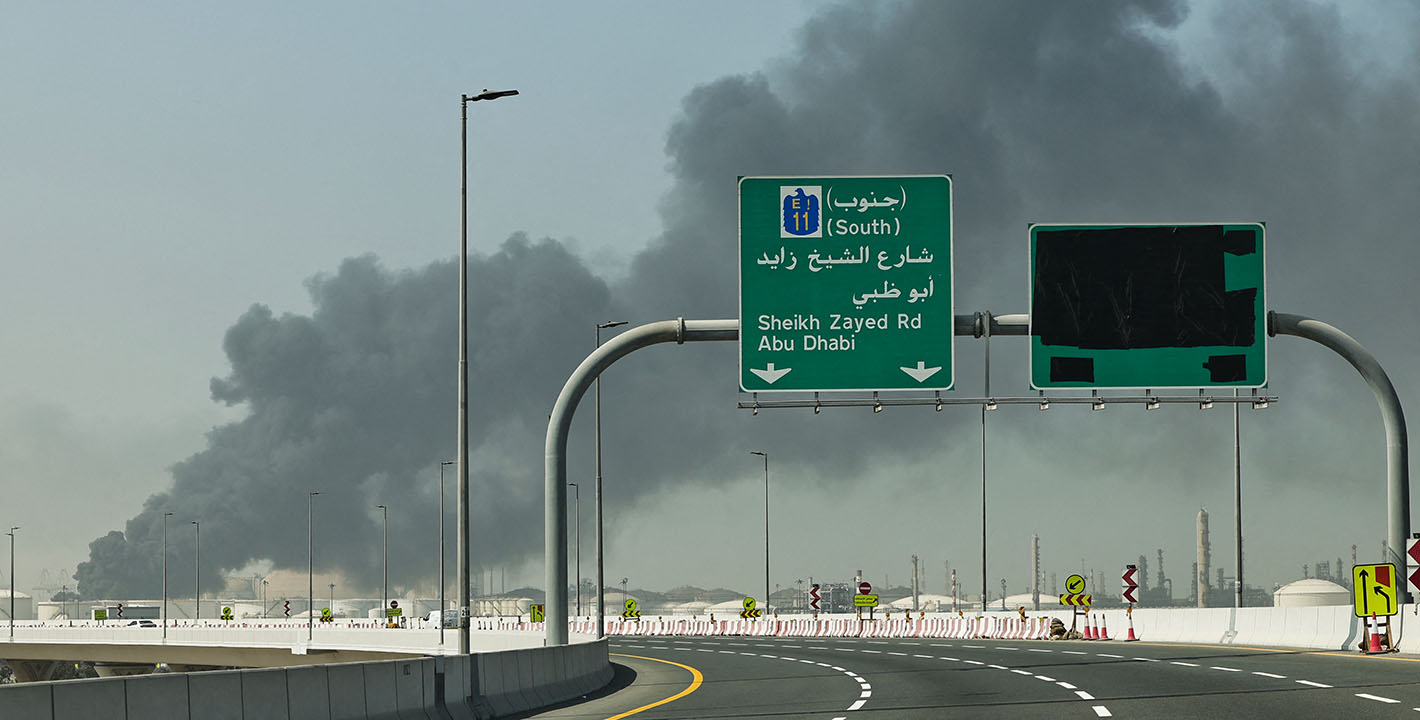
Source: Getty
The countries in the region are managing the fallout from Iranian strikes in a paradoxical way.
Iranian strikes on targets in the Gulf countries in retaliation for the U.S. and Israeli attack on Iran on February 28 has disrupted a delicate balance that had prevailed in the region. The central question now facing Gulf leaders is clear: Can they continue relying on the United States for protection, or must they begin reconsidering their entire security strategy?
For decades, governments in these countries had regarded Iran as a strategic rival, yet this competition had played out through proxy conflicts, political standoffs, and diplomatic measures. The latest strikes have changed that pattern. By targeting multiple locations in the Gulf, Iran signaled that it was willing to bring the confrontation closer to the region’s core economic and political centers. Today, leaders in Riyadh, Abu Dhabi, Doha, and other Gulf capitals face a new and uncomfortable reality: they must respond to Iranian pressure while trying to avoid being pulled into a wider regional war.
The latest escalation with Iran, coming amid an expanding confrontation between Iran, Israel, and the United States, has highlighted how exposed Gulf states remain, even while hosting U.S. forces and advanced defense systems. In this context, Iran’s actions show it has a “Samson option” of its own—in reference to the Israeli resort to nuclear weapons if Israel is ever threatened existentially. The doctrine is based on the story from the Bible, in which Samson, made powerless, brings the temple down on himself and his enemies. Because of a limited ability to confront the Americans and Israelis directly in what it considers to be an existential battle, Iran has engaged in unexpected attacks on its neighbors, which are vulnerable to asymmetric actions, regardless of the detrimental consequences this may have for Tehran.
For the Gulf states, the dilemma is obvious: If they respond too weakly to the Iranian attacks, this may invite further attacks; but if they respond too strongly, they risk widening the scope of the conflict. Despite significant investments in defense capabilities, countries in the Gulf remain particularly exposed to Iranian military capabilities—from missiles to drones to disruptions of maritime passages. These vulnerabilities make the decision to go to war far more complicated than they appear. This reality explains why Gulf leaders have so far approached the current conflict with calculated caution.
Behind the scenes, a U.S. diplomat who spoke on the condition of anonymity told Diwan that Gulf governments have turned to Washington for consultations. However, these discussions are taking place at a moment when several of the Gulf states are already reassessing the depth of their reliance on the United States. For decades, the American security umbrella formed the backbone of the Gulf states’ defense strategies. Yet recent events, from the limited U.S. response to earlier attacks on Gulf infrastructure to shifting U.S. priorities globally, have raised questions about how dependable that umbrella really is.
Reports indicate that major regional players, including Saudi Arabia, the United Arab Emirates, Kuwait, and Qatar, have engaged in high-level talks about the future of the current contract with the United States, which cover everything from defense procurement to energy and infrastructure cooperation. This points to a broader trend: Gulf leaders increasingly want to diversify their strategic partnerships rather than rely on a single security patron.
This reassessment does not mean the Gulf countries are preparing to abandon the United States. In fact, the opposite may be true: Iran’s attacks may ultimately reinforce their dependency on Washington by underscoring the scale of the threat they face. Iran’s missile and drone capabilities, combined with its ability to disrupt shipping routes and energy infrastructure, remain far beyond what any single Gulf state can manage alone. As a result, what we’re likely to see is that the current crisis will deepen security coordination with the United States, the only actor capable of providing the level of military deterrence and integrated defense systems required to counter Iran’s missile and drone capabilities, even as Gulf leaders quietly explore ways to reduce their exposure to shifts in U.S. priorities.
Whether this balancing act can be sustained remains uncertain. Pursuing multiple partnerships may enhance the Gulf states’ strategic flexibility and reduce their vulnerability to abrupt geopolitical shifts, but it also risks creating tensions if competing powers interpret such diversification as a signal of wavering alignment. Much will depend on how effectively Gulf leaders manage these relationships without undermining the deterrence that their ties with Washington provide. In that sense, a key question is not simply whether diversification is possible, but whether it can genuinely strengthen regional security, or whether it will expose the limits of a strategy that seeks reassurance from several directions at once.
Saudi Arabia in particular will play a decisive role in shaping this outcome. As the largest and most influential Gulf nation, its response to the Iranian strikes will set the tone for the rest of the region. Saudi leaders must balance several pressures at once: maintaining their strategic partnership with Washington, avoiding a direct confrontation with Iran, and protecting critical oil infrastructure that remains central to both the Saudi and global economies.
For now, the immediate priority across the Gulf is to prevent the confrontation from escalating further while protecting critical energy infrastructure and economic stability. The memory of the 2019 attacks on Saudi Arabia’s Abqaiq and Khurais oil facilities remains fresh. The missile and drone attack, conducted by Iran or their Ansar Allah allies in Yemen, temporarily cut roughly half of the kingdom’s oil production. The latest Iranian strikes have revived fears that similar attacks could occur again if the war expands.
Ultimately, the current crisis may mark the beginning of a gradual transformation in Gulf security thinking. Rather than replacing the U.S. partnership, Gulf states appear to be recalibrating it, seeking to preserve the protection it offers while building a wider set of diplomatic and strategic options. How successfully they navigate this transition will shape the region’s security architecture for years to come.

Angie Omar
Editor-in-chief, Sada
Angie Omar is an accomplished international journalist, editor, producer, and writer with a wealth of experience in the news and politics industries.
Recent Work
Angie Omar
Carnegie does not take institutional positions on public policy issues; the views represented herein are those of the author(s) and do not necessarily reflect the views of Carnegie, its staff, or its trustees.

In an interview, Hassan Mneimneh discusses the ongoing conflict and the myriad miscalculations characterizing it.

Michael Young
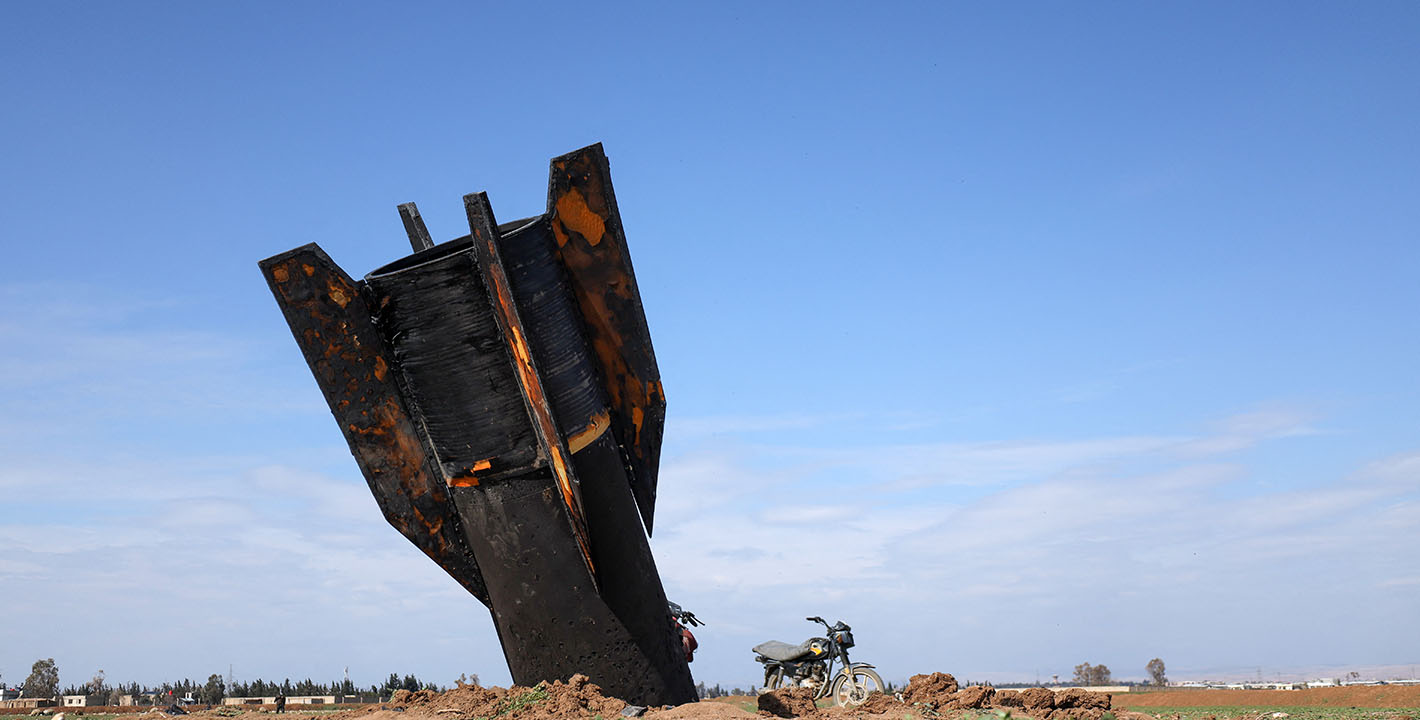
In an interview, Nicole Grajewski discusses the military dimension of the U.S. and Israeli attacks on Iran.
Michael Young

In an interview, Naysan Rafati assesses the first week that followed the U.S. and Israeli attack on Iran.
Michael Young
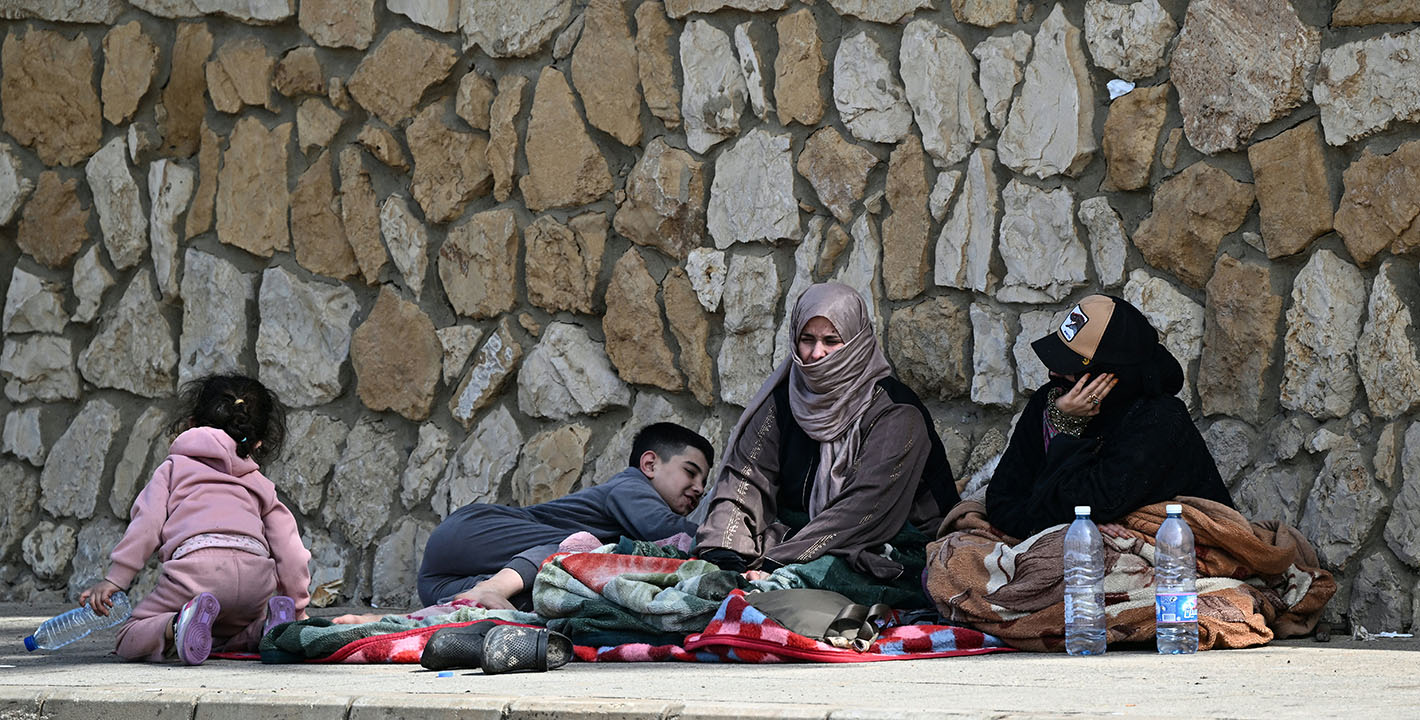
At heart, to impose unconditional surrender on Hezbollah and uproot the party among its coreligionists.

Yezid Sayigh
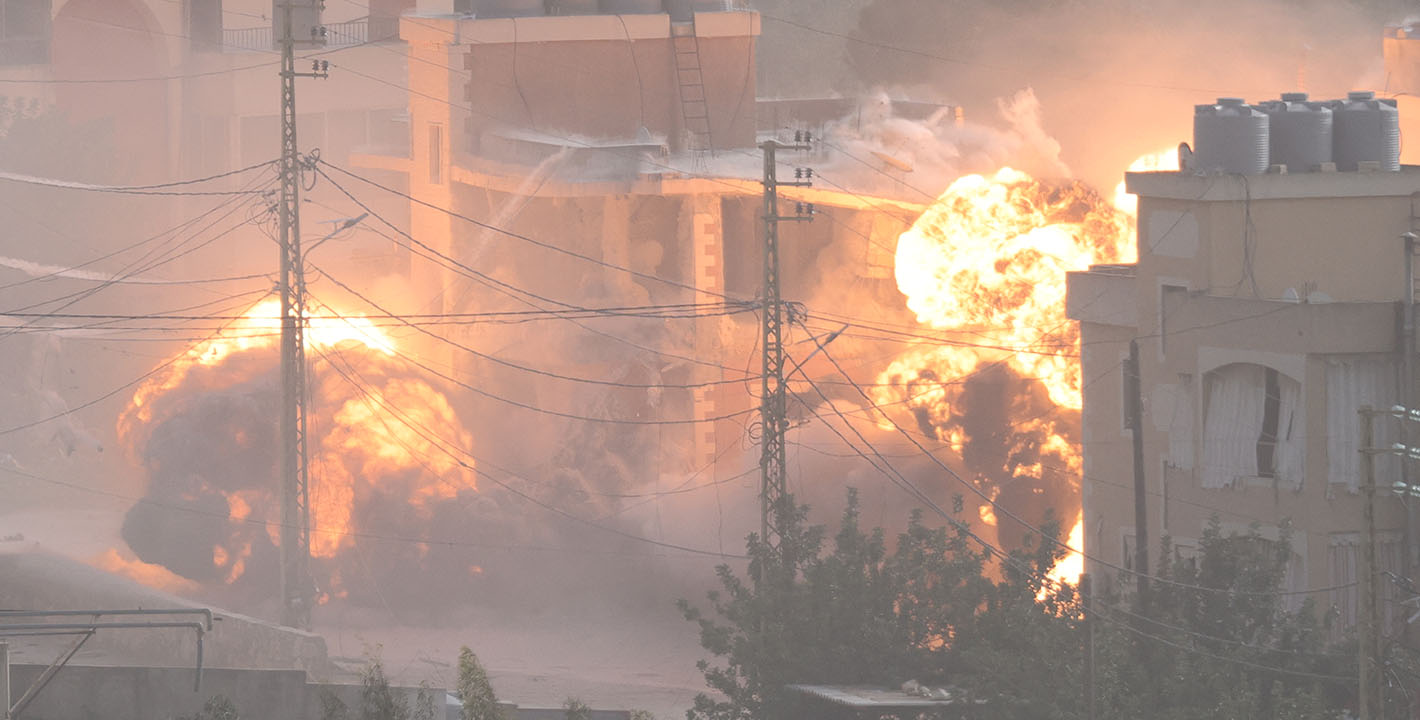
As Iran defends its interests in the region and its regime’s survival, it may push Hezbollah into the abyss.
Michael Young