

Feature
The Disaster Dollar Database is a tool that tracks the major sources of federal funding for disaster recovery in the United States.
{
  "authors": [
    "Sarah Labowitz",
    "Debbra Goh"
  ],
  "type": "commentary",
  "blog": "Emissary",
  "centerAffiliationAll": "dc",
  "centers": [
    "Carnegie Endowment for International Peace"
  ],
  "englishNewsletterAll": "ctw",
  "nonEnglishNewsletterAll": "",
  "primaryCenter": "Carnegie Endowment for International Peace",
  "programAffiliation": "SCP",
  "programs": [
    "Sustainability, Climate, and Geopolitics"
  ],
  "regions": [
    "United States"
  ],
  "topics": [
    "Security",
    "Domestic Politics",
    "Climate Change"
  ]
}
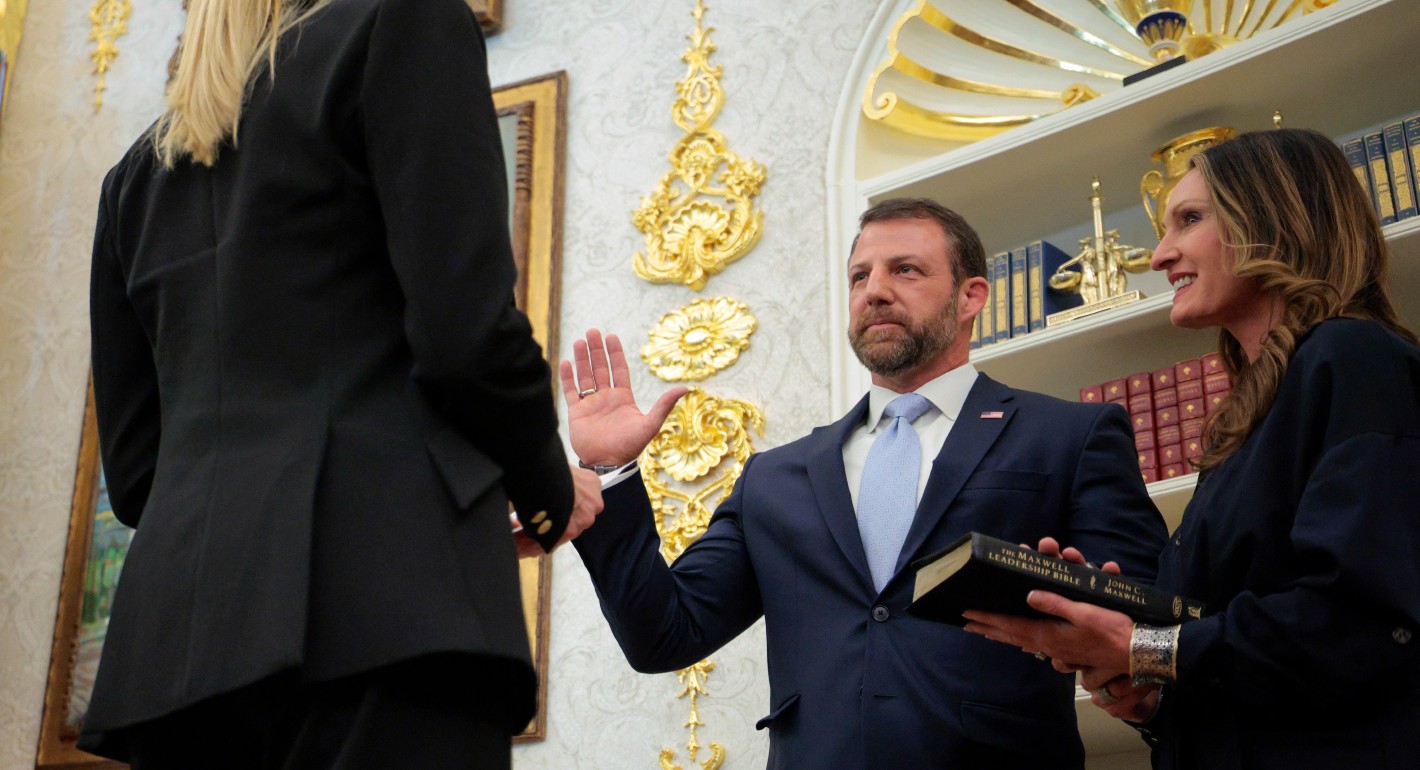
Mullin is sworn in as the Department of Homeland Security secretary at the White House on March 24, 2026. (Photo by Chip Somodevilla/Getty Images)
Restoring competence and trust to the anemic, neglected disaster recovery agency is a matter of national security.
On Monday, Oklahoma Senator Markwayne Mullin was confirmed to be the next secretary of the Department of Homeland Security (DHS). At his hearing, Mullin sought to separate himself from his predecessor, Kristi Noem, on any number of DHS policy areas. But his clearest departure was in the way DHS oversees the Federal Emergency Management Agency (FEMA). As we’ve written about before, the way a country prepares for and responds to disasters is fundamental to its national security, especially in a climate increasingly characterized by more frequent and costly disasters. After months of neglect, and on the verge of what could be another disaster-filled summer, can FEMA finally turn the page?
Mullin made three key announcements at his confirmation hearing. First, he said that the administration would nominate “someone that is capable of doing the job . . . that has experience doing the job” of FEMA administrator. Over the past fourteen months of the second Trump administration, the agency has been headed by three different acting administrators, none of whom has met the experience requirements set forth by Congress.
Second, Mullin said he would repeal Noem’s policy of requiring her signature on contracts above $100,000—a practice he called “micromanaging.” The policy had been widely criticized for delaying disaster response, such as in the deadly Texas Hill Country floods in July 2025, and long-term disaster recovery. The New York Times reported that $17 billion in reimbursements owed to state and local governments had been held up by the policy. Jurisdictions with small budgets have been hit particularly hard: They have had to carry the costs of loans and interest from disaster-related expenses while they wait for FEMA payments that professional staff have already approved but still required Noem’s signature.
The Disaster Dollar Database is a tool that tracks the major sources of federal funding for disaster recovery in the United States.
Third, Mullin said that the agency would re-engage with the Office of the Inspector General and stand up a legislative affairs office to communicate with Congress. Noem had stopped cooperating with the inspector general on multiple investigations, and under her leadership, FEMA had halted basic legislative support functions, such as providing cost estimates to the Congressional Budget Office to evaluate the cost of bills such as the FEMA Act of 2025.
These three announcements are welcome news, but a fourth area made us raise our eyebrows. Throughout his testimony, Mullin struck a tone of partisan neutrality, emphasizing at least twice that he would take care of other states as he does his own home state. FEMA has been trending in a highly partisan direction over the past year when it comes to issuing disaster declarations. Understanding that nominees often change course when they take the reins, will Mullin actually be able to reverse this trend? Let’s look at the data.
Although major disaster declarations are made by the president, the process historically has been driven by nonpartisan experts at the agency level. With far fewer senior professional staff at FEMA in 2025 and a much bigger role for the White House in disaster declarations, the process has become worryingly political in the second Trump administration.
In the first fourteen months of the administration, major disaster declaration requests coming from Democratic governors were much more likely to be denied than those from Republican governors. Over the past six administrations, the average denial rate for all disaster declaration requests was around 15 percent, regardless of the party affiliation of the governor. Since January 2025, the Trump administration denied more than half of requests from states with Democratic governors, while Republican-led states maintained an average denial rate. (Note that in our analysis, we count appeals as denials until and unless they are approved, since appeals are only made for requests that have been denied.)
Democratic governors have suggested that their denials were politically motivated, with Colorado Governor Jared Polis accusing Trump of playing political games after the state’s request for the Lee and Elk fires was denied. But communication from Trump affirms that partisanship factors into his decision for approving disaster aid requests, rewarding states who voted for him. In social media posts, the president has noted disaster assistance approval alongside the years that he won the state.
Mullin and whoever the administration nominates to be FEMA administrator will have their work cut out for them in rebuilding trust in DHS and FEMA. Taking care of Oklahoma or Kentucky—or California, Colorado, or Maryland—as much as any other state will be a real test of their leadership.
Another area we believe merits significant attention from the next DHS leader and FEMA administrator is the pace of disaster declaration request approval. Prior to 2025, these requests were considered on a rolling basis. Over a twenty-year period—from the start of George W. Bush’s second term to the end of Joe Biden’s administration—the average wait time was 23.46 days. Since Trump’s second term began, that wait more than doubled, to 58.08 days.
In previous years, state and local governments would fund the activities of their immediate disaster responses, knowing that federal reimbursement—as well as personnel and other assistance—would shortly follow. That’s no longer the case. For jurisdictions that have exceeded their capacities to manage major disasters, the extended wait means they are on their own for months. They simply don’t have the financial resources and emergency management personnel and capabilities to respond and recover in the way that a federally supported effort would.
Speeding up decisions will require two major changes. First, Mullin will need to nominate a permanent, qualified administrator who has the experience to address delays. Second, he will need the White House to return primary responsibility for making recommendations on disaster declaration requests to FEMA. In his testimony, Mullin characterized his leadership style as prioritizing competence and delegation to qualified people. With the Atlantic hurricane season in an El Niño year just three months away, he has no time to waste in nominating a FEMA administrator that embodies this style.
After a year of chaos at FEMA, Mullin’s testimony was a welcome signal of a new direction. The proof of his commitments and leadership style will be in how FEMA operates and whether he is able to steer the agency in a more competent and less partisan direction. The federal government is facing increasing pressure to demonstrate to Americans that it can take care of its own people while also fighting wars on multiple fronts. Restoring competence and trust to FEMA is a matter of national security. It’s also a matter of restoring faith in the government to perform its most basic functions: showing up for people— regardless of whom they voted for—in an emergency.
The latest from Carnegie scholars on the world’s most pressing challenges, delivered to your inbox.

Senior Fellow, Sustainability, Climate, and Geopolitics Program
Sarah Labowitz is a senior fellow in the Sustainability, Climate, and Geopolitics Program whose work lies at the intersection of climate, national security, and democracy.

Debbra Goh
Research Assistant, Sustainability, Climate and Geopolitics Program
Debbra Goh is a research assistant in the Sustainability, Climate and Geopolitics Program.
Carnegie does not take institutional positions on public policy issues; the views represented herein are those of the author(s) and do not necessarily reflect the views of Carnegie, its staff, or its trustees.

Although the IAA often differs from the IRA, European policymakers can still take note of the U.S. act’s shortcomings.

Milo McBride

Even if the Iran war stops, restarting production and transport for fertilizers and their components could take weeks—at a crucial moment for planting.

Noah Gordon, Lucy Corthell
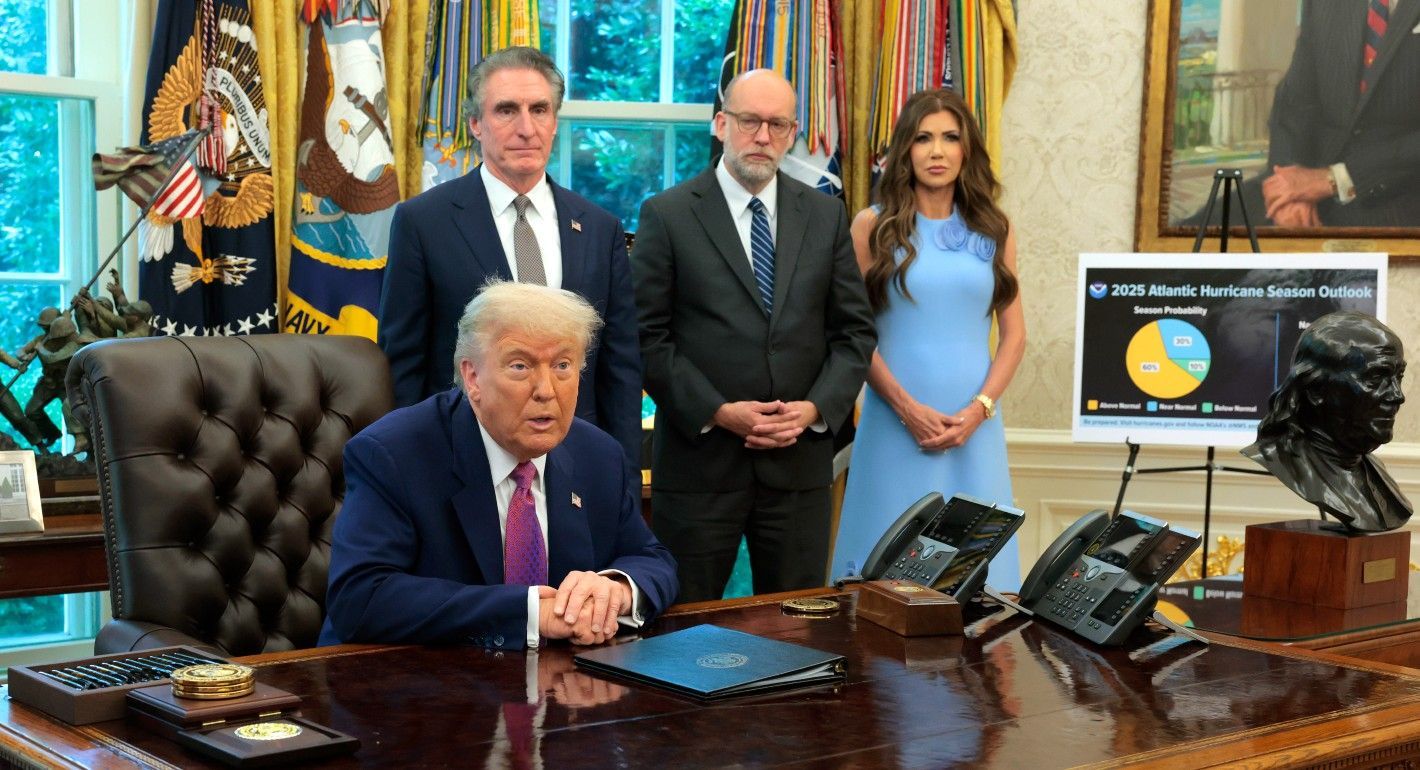
Former agency officials discuss how reforms could reshape the agency and how states should prepare.
Sarah Labowitz

The cessation and mass removal of emissions would not simply turn back the clock.
Noah Gordon

Washington’s opposition to the IMO’s Net-Zero Framework jeopardizes a landmark agreement and hands rivals the chance to lead the clean shipping transition.

Narayan Subramanian